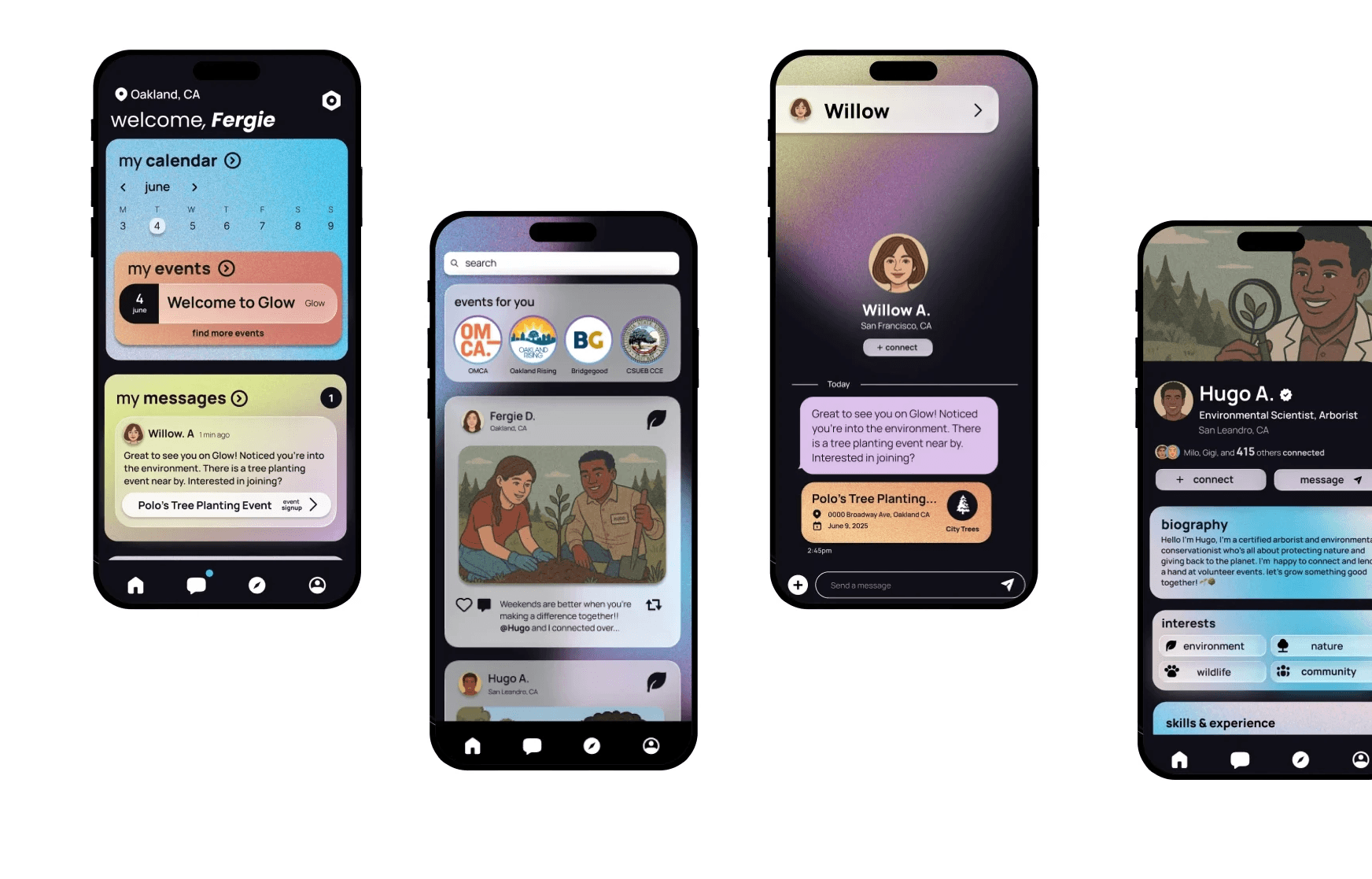
Glow is a volunteer seeking, social media style app designed to solve the challenges of
volunteer engagement by providing personalized opportunity matching with AI onboarding
and centered around community connection. It transforms the volunteering process from a
complex sign-up into a seamless journey that builds accountability and helps users feel part
of something bigger and have a deeper purpose.
Glow is a volunteer seeking, social media style app designed to solve the challenges of
volunteer engagement by providing personalized opportunity matching with AI onboarding
and centered around community connection. It transforms the volunteering process from a
complex sign-up into a seamless journey that builds accountability and helps users feel part
of something bigger and have a deeper purpose.
Volunteering Social Media Platform
Volunteering Social Media Platform
Lead Designer
Business Strategist
Lead Designer
Business Strategist
Ryan Coquilla (Beyond)
Kevin Tufts (Meta)
Harry Kris (Wells Fargo)
Eddie Ip (Wells Fargo)
Ryan Coquilla (Beyond)
Kevin Tufts (Meta)
Harry Kris (Wells Fargo)
Eddie Ip (Wells Fargo)
Volunteering in this present day and age has been hidden and pushed away as something that
is hard to find, get connected to and even harder to commit to. With schools lack of promotion
on volunteer opportunities, big corporation companies requiring employees to take personal
time off to participate in local community events and overall lack of reward for volunteers.
We felt we wanted to redefine what volunteering has been looked at for so many years into
something new that excites people and gives people purpose by connecting them to
the community and what they feel connected too
Volunteering in this present day and age has been hidden and pushed away as something that
is hard to find, get connected to and even harder to commit to. With schools lack of promotion
on volunteer opportunities, big corporation companies requiring employees to take personal
time off to participate in local community events and overall lack of reward for volunteers.
We felt we wanted to redefine what volunteering has been looked at for so many years into
something new that excites people and gives people purpose by connecting them to
the community and what they feel connected too
"I want to help, but I don't want to show up
to a park alone where I don't know anyone."
"Volunteers sign up and then disappear.
There’s no easy way to keep them
excited before the event."
To better understand the disconnect between volunteer seekers and organizations,
we conducted research with stakeholders from both sides of the ecosystem.
This included deep-dive interviews with College Director for Community Engagement
and Volunteer Recruiters, alongside a quantitative survey of 60 college students—ranging from
active volunteers to those who have never participated.
Insights & Takeaways
The Generational Communication Gap: There is a critical tech divide; organizations rely
on email which students rarely check, while students prefer modern social platforms that older
coordinators find difficult to navigate.
High Effort, Low Perceived Reward: Many students feel that volunteering provides
no tangible "output" or reward for their time, leading to high drop-off rates after a single event.
The "Solo" Barrier: A primary reason non-volunteers hesitate to sign up is the fear of
social isolation—they are far less likely to participate if they don't know someone else attending.
Professional & Academic Alignment: Interest in volunteering spikes significantly when
the opportunity offers a professional incentive, such as internship experience, program hours,
or college credits.
Scheduling Friction: Students with busy work and school schedules struggle to find
opportunities that fit into small windows of time, making traditional, long-form sign-ups
feel inaccessible.
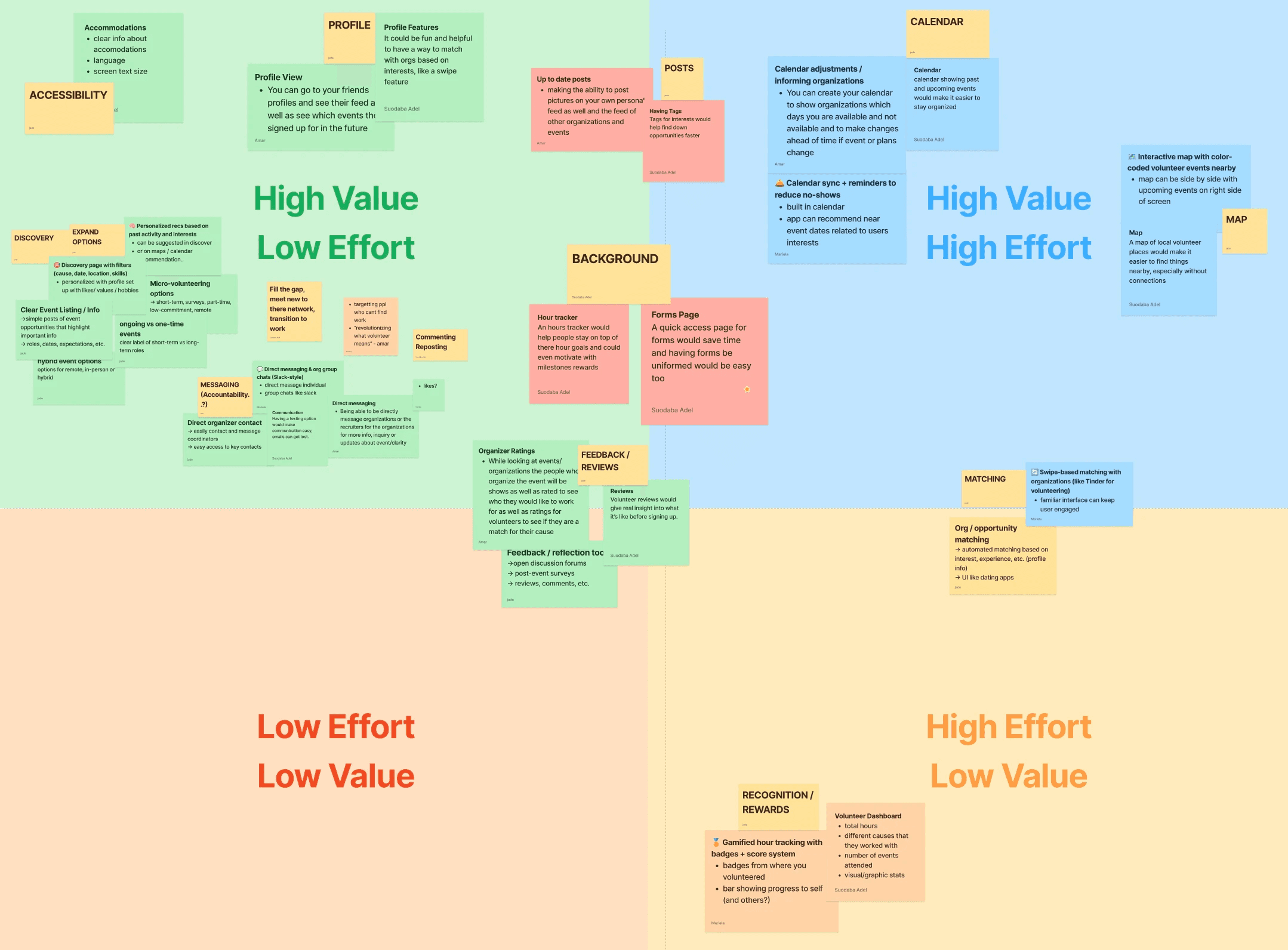
Balancing Value vs. Effort
After synthesizing our research, we had a long list of potential features. To ensure we built
a product that was both impactful for students and feasible to develop, we utilized a
Value vs. Effort Matrix. This allowed us to identify "Quick Wins" and prioritize the features that
directly addressed the core pain points identified in our research.
Personalized Recommendations: We prioritized AI-driven suggestions based on past activity
and interests. This directly solves the "lack of personalization" issue found in our survey.
Direct & Group Messaging: To solve the "Solo Fear," we prioritized social features that
allow volunteers to connect with each other and organizers instantly, moving
communication away from ignored emails.
Micro-Volunteering Options: We focused on low-commitment, short-term roles to
accommodate the busy schedules of students who feel they don't have time
for traditional volunteering.
Calendar Sync & Reminders: To solve the "no-show" problem highlighted by the
Director of Community Engagement, we invested heavily in a built-in calendar with
automated reminders to drive accountability.
Balancing Value vs. Effort
After synthesizing our research, we had a long list of potential features. To ensure we built
a product that was both impactful for students and feasible to develop, we utilized a
Value vs. Effort Matrix. This allowed us to identify "Quick Wins" and prioritize the features that
directly addressed the core pain points identified in our research.
Personalized Recommendations: We prioritized AI-driven suggestions based on past activity
and interests. This directly solves the "lack of personalization" issue found in our survey.
Direct & Group Messaging: To solve the "Solo Fear," we prioritized social features that
allow volunteers to connect with each other and organizers instantly, moving
communication away from ignored emails.
Micro-Volunteering Options: We focused on low-commitment, short-term roles to
accommodate the busy schedules of students who feel they don't have time
for traditional volunteering.
Calendar Sync & Reminders: To solve the "no-show" problem highlighted by the
Director of Community Engagement, we invested heavily in a built-in calendar with
automated reminders to drive accountability.
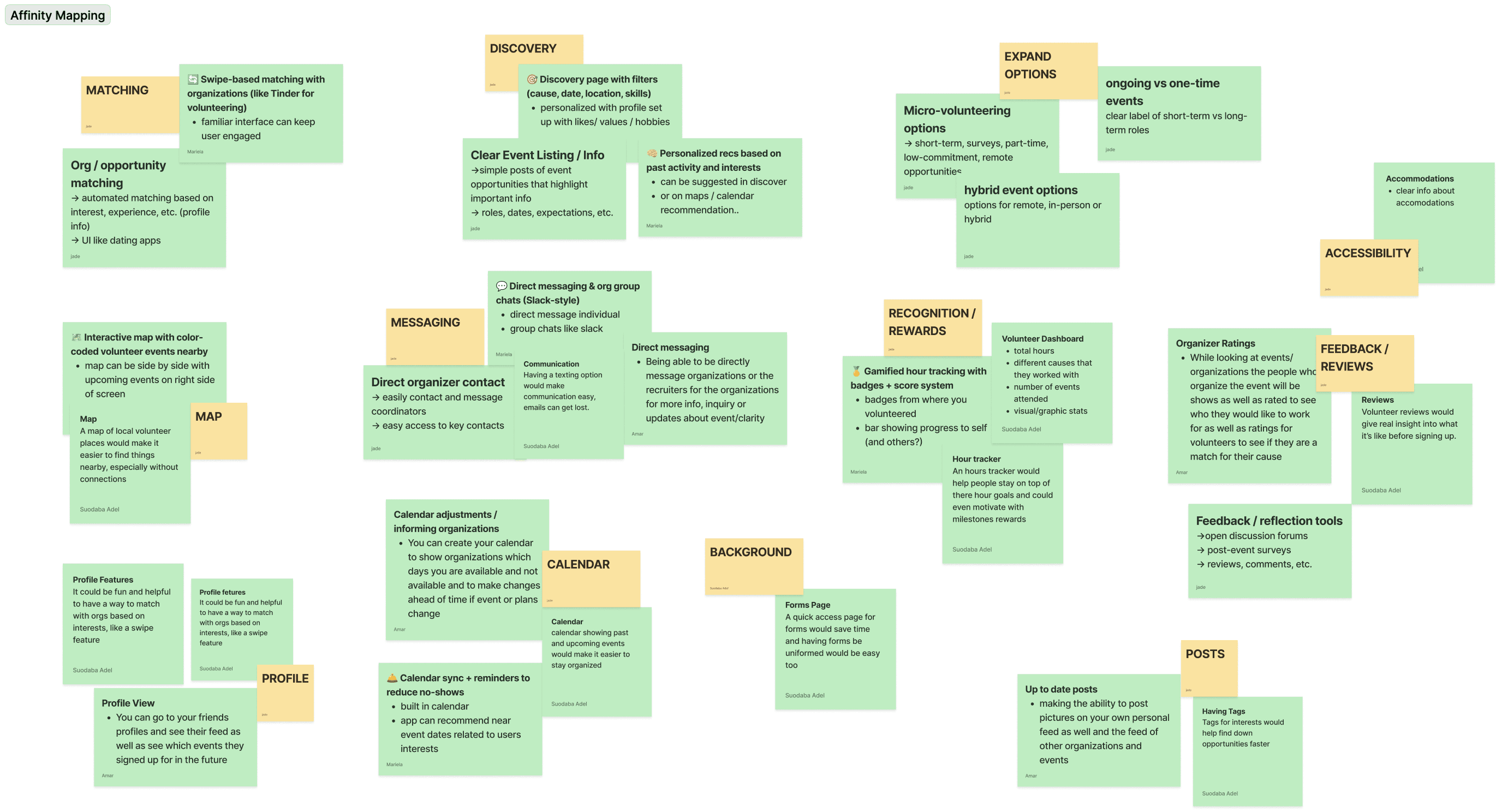
Collaborative Categorization:
As a team, we brainstormed and grouped dozens of feature ideas into 12 distinct categories,
ranging from Discovery and Messaging to Profile and Accessibility.
Social & Communication: We realized that "Messaging" wasn't just a feature but a solution to the
"Solo Barrier." This led to the inclusion of Slack-style group chats and direct organizer contact
to bridge the generational communication gap.
Discovery & Personalization: We moved beyond simple lists to include personalized
recommendations and cause-based filters, ensuring opportunities align with student passions
and career goals.
Accountability: To address the Director’s concerns about "no-shows," we prioritized
Calendar Sync and Reminders as a core pillar of the platform.
The "Aha" Moment:
The Swipe Feature Pivot: We initially loved the idea of "Tinder-style" swipe matching.
However, through our matrix analysis, we realized it was High Effort but Low Value
compared to deeper community-building tools. We made the strategic decision to deprioritize
"swiping" to focus on Direct Messaging and Group Chats, which our research proved were
more effective at solving the isolation problem.
Interactive Design:
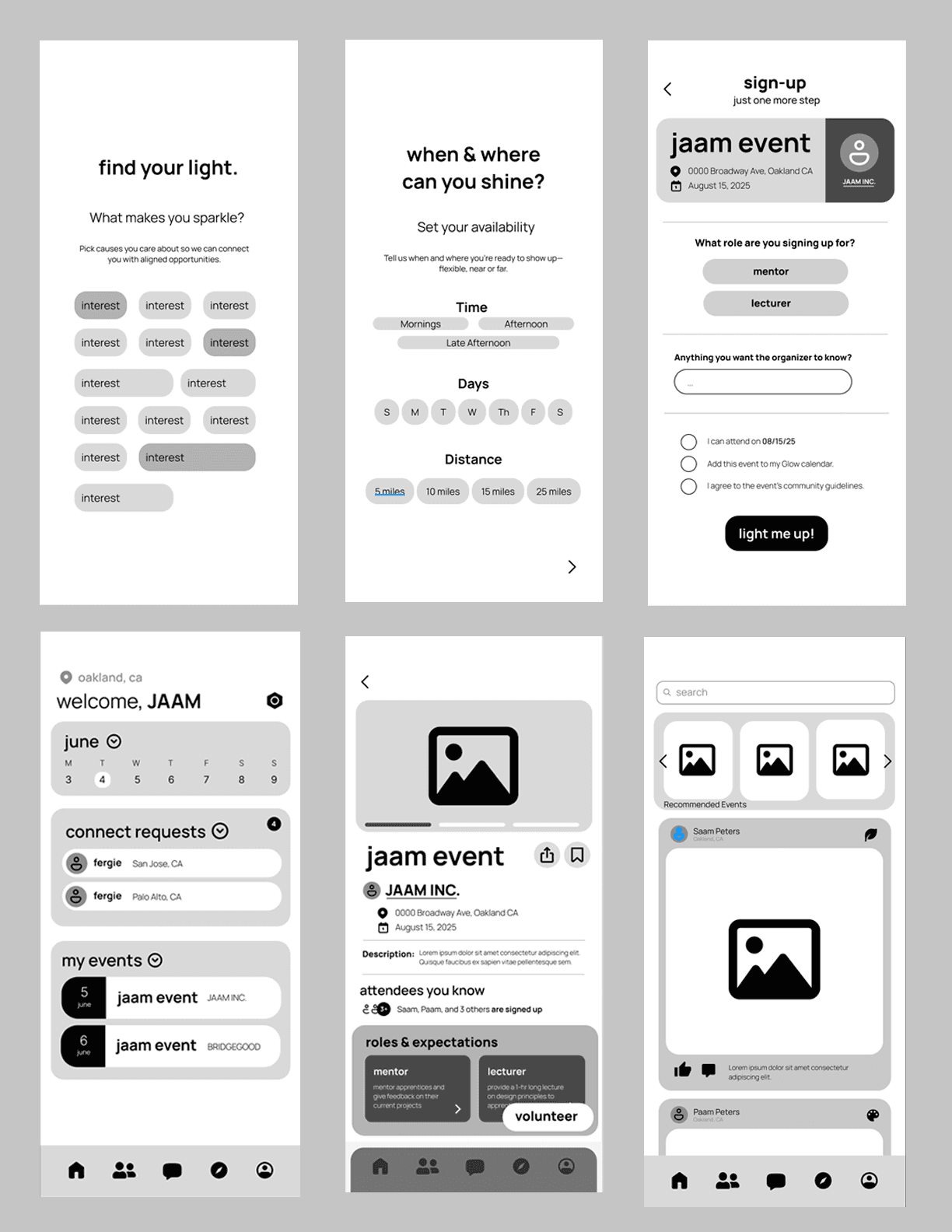
To define Glow’s architecture, we conducted a comprehensive competitive analysis, evaluating
social media platforms, communication apps, event websites, and traditional volunteer portals.
While early iterations mirrored the dense, transactional feel of a job board, we pivoted toward a
layout that replicates the familiar patterns of social media—specifically incorporating a discovery
feed, personal profiles, and integrated messaging.
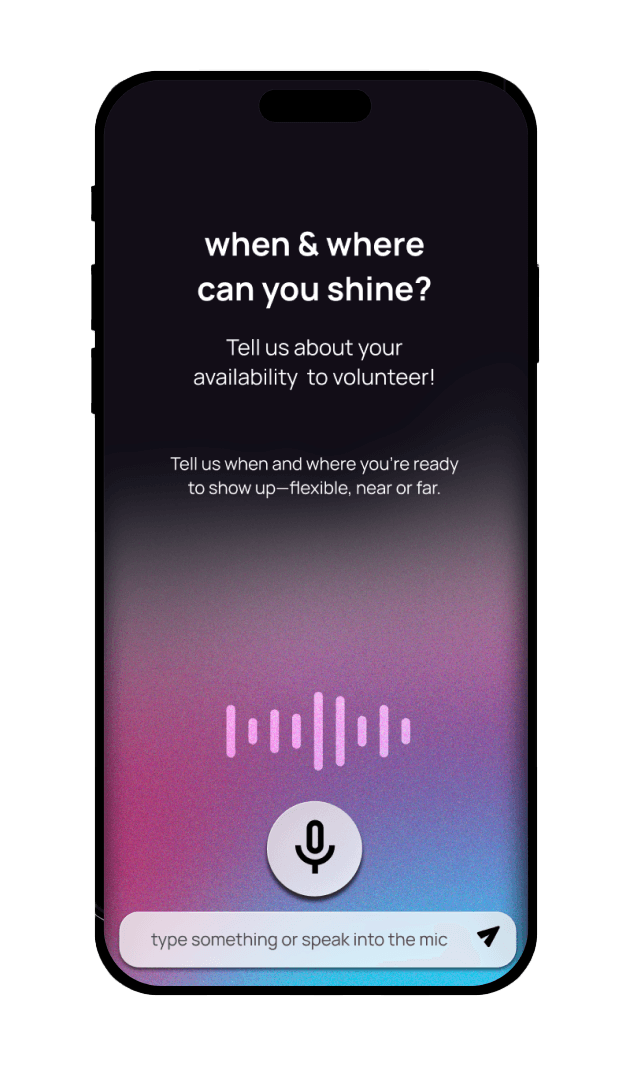
Speaking or typing interests and availability allows the AI to curate a personalized
schedule instantly—making the transition from discovery to commitment feel effortless.
This conversational, multi-modal approach prioritizes universal accessibility while
solving the scheduling friction found in our research.
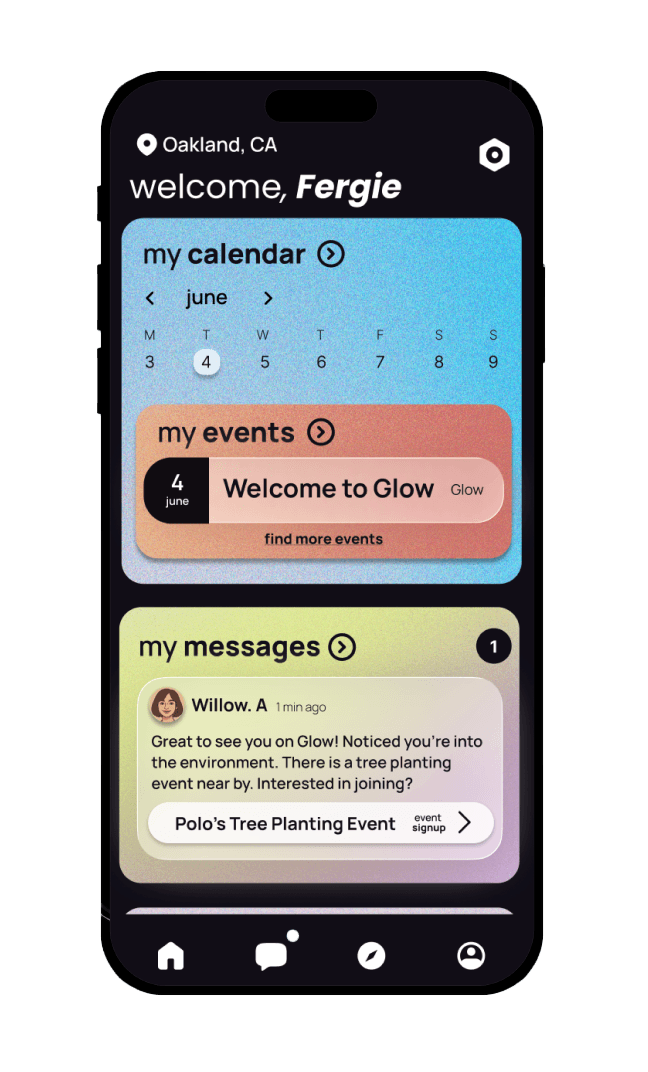
Placing the calendar and messaging front and center fosters a culture of
accountability—making it effortless for volunteers to manage their commitments
and stay connected. This layout ensures that upcoming events and organizer
communications are always top-of-mind, directly solving the "no-show" friction
found in our research.
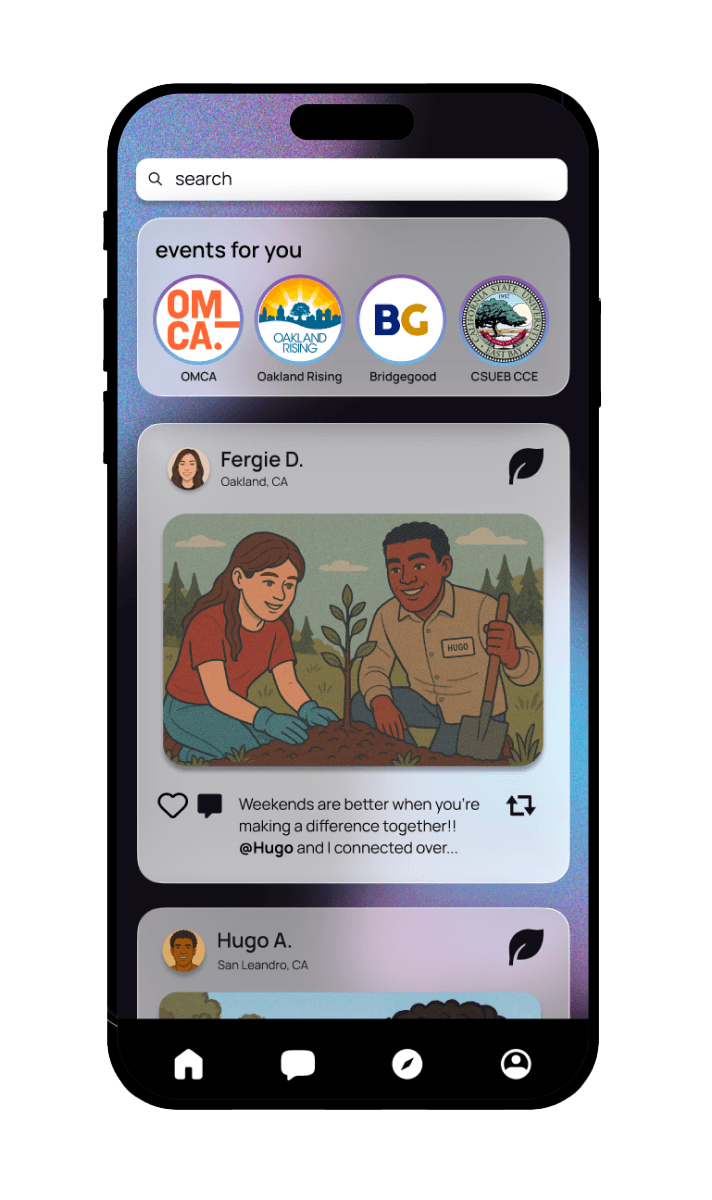
We chose a social media architecture because our research proved that volunteering isn’t just
a logistical task—it’s a social experience. By moving away from the "job board" model, we
transformed volunteering from a lonely, transactional chore into a visible, community-driven
lifestyle that matches how students already communicate.
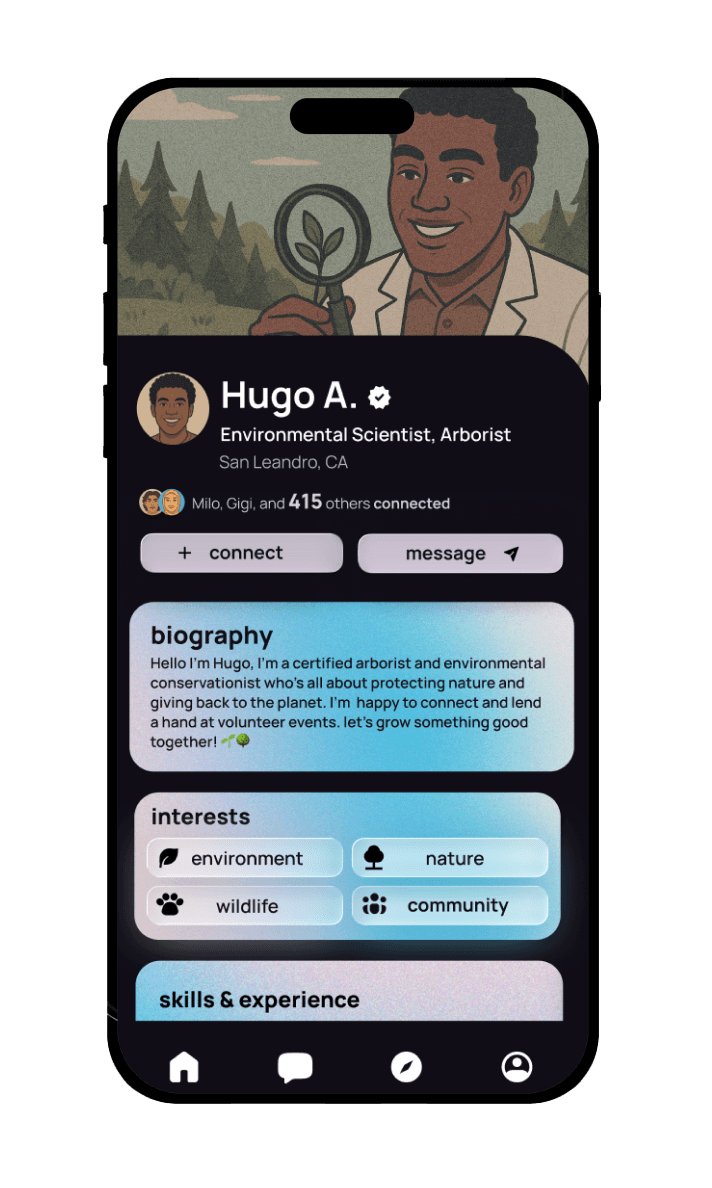
Displaying biographies, interests, and past accomplishments makes every user's impact
visible and personal. By highlighting shared skills and activity, the profile page removes
the barrier of "volunteering alone" and helps users find a community they actually belong to.
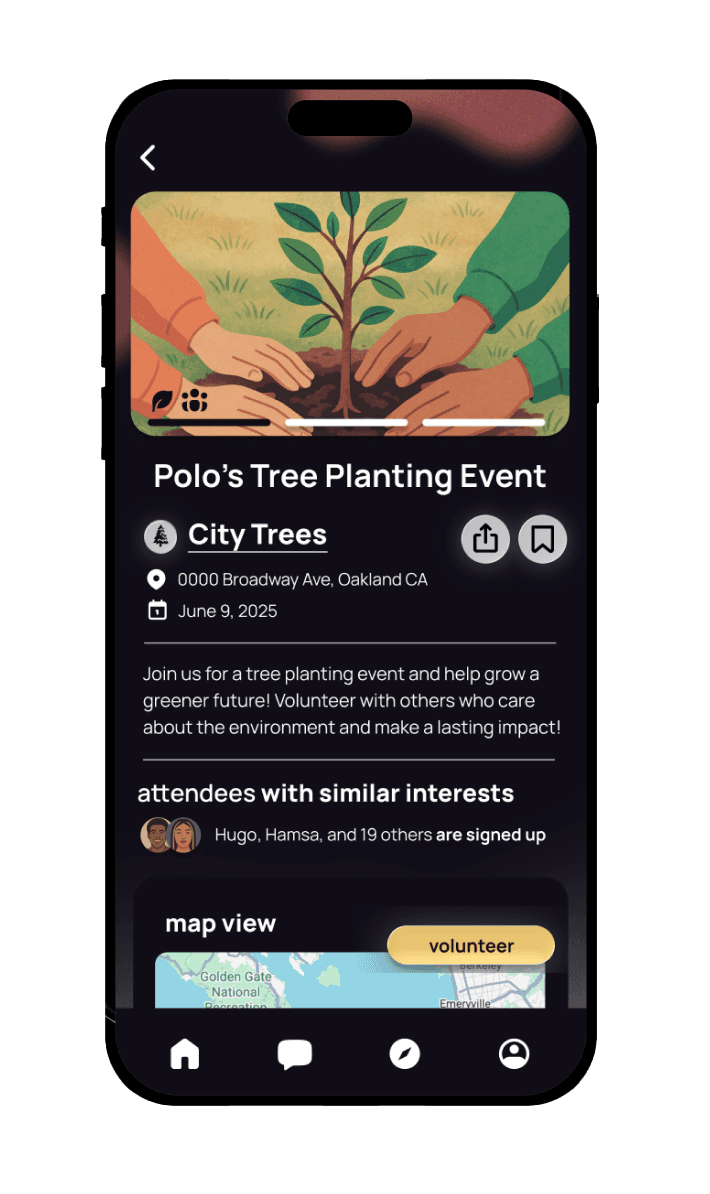
Events are automatically tagged to match your specific interests, ensuring the most relevant
opportunities surface on your discovery feed. By highlighting attendees with similar passions,
the interface makes it easier to spark a conversation and build a community before the
event even begins. This design replaces the "solo" volunteer experience with a social-first
approach that turns shared values into real-world connections.
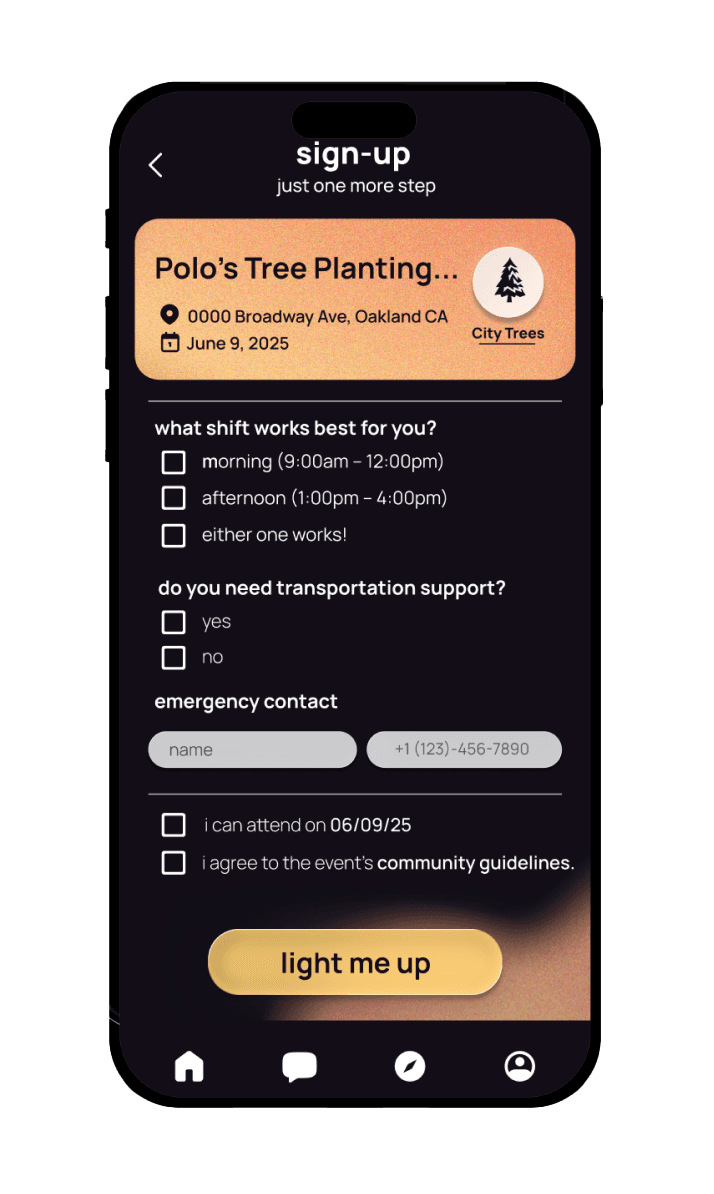
By turning a generic "sign up" into a concrete commitment with clear logistics, the interface
directly reduces "no-show" rates and ensures a reliable connection between
organizations and their volunteers.
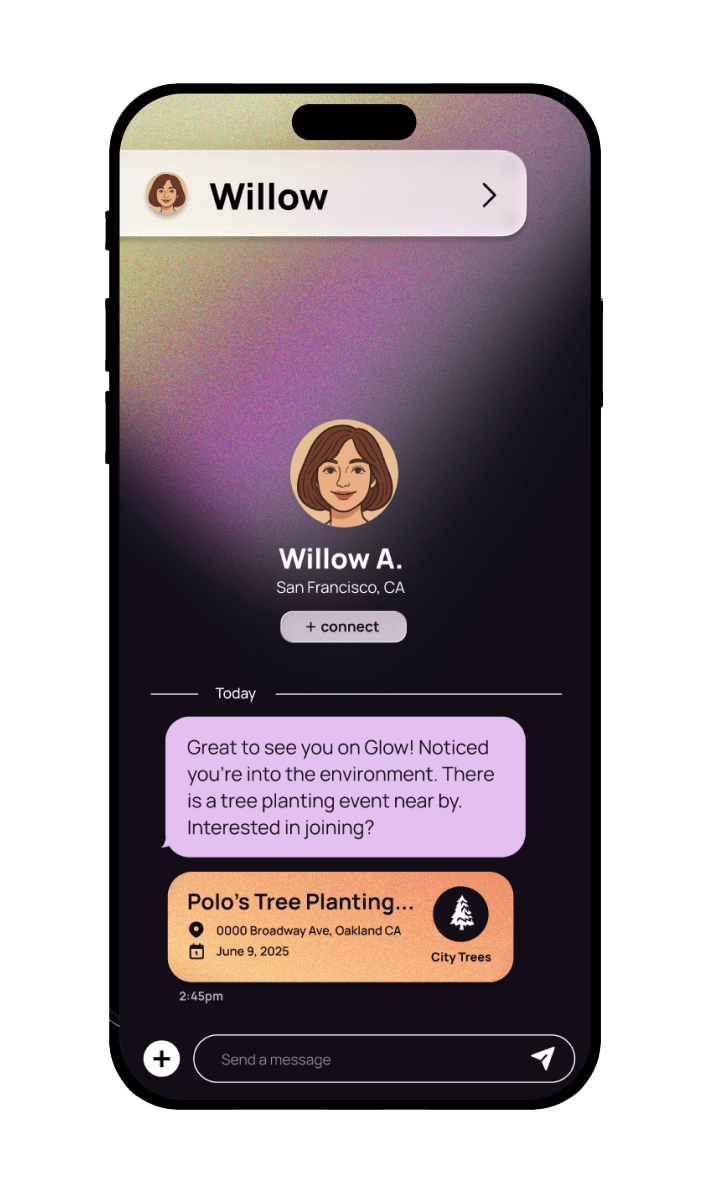
By enabling real-time event sharing within a chat thread, the platform transforms individual
discovery into a collective social activity, making it easier to recruit friends and coordinate
logistics in a single, familiar interface.
Direct Messaging & Event Sharing
Utilize AI onboarding to match volunteers with opportunities and schedules while redefining
volunteering applications and turning them into a social media platform to connect with the
community and others volunteers/volunteer organizations to make volunteering rewarding
"I want to help, but I don't want to show up
to a park alone where I don't know anyone."
"Volunteers sign up and then disappear.
There’s no easy way to keep them
excited before the event."
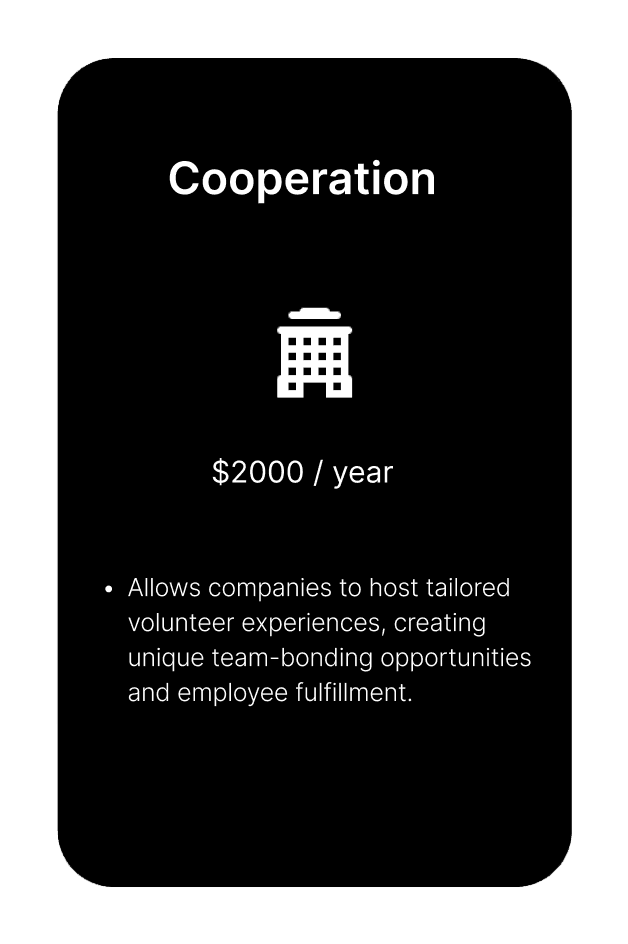
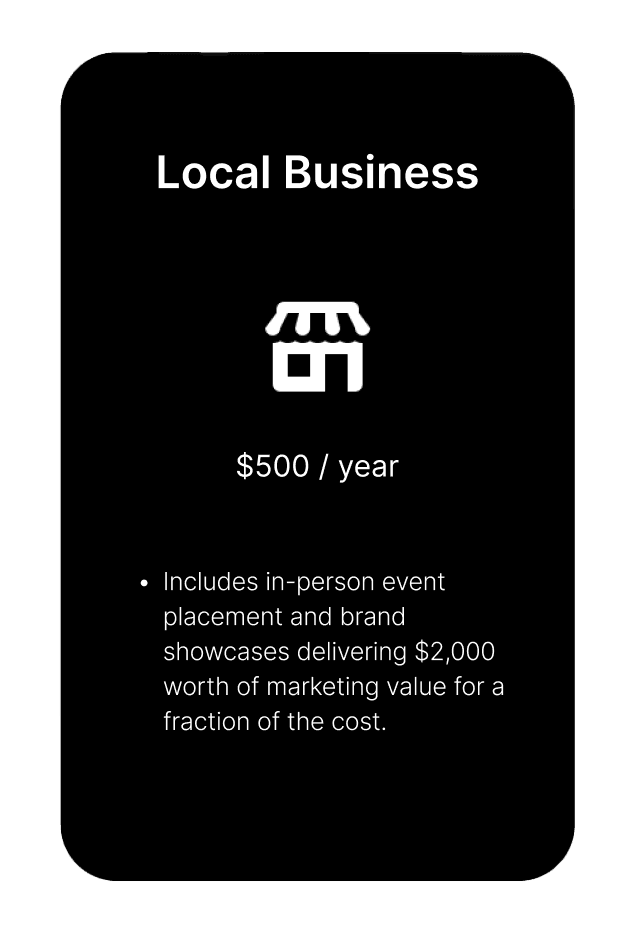
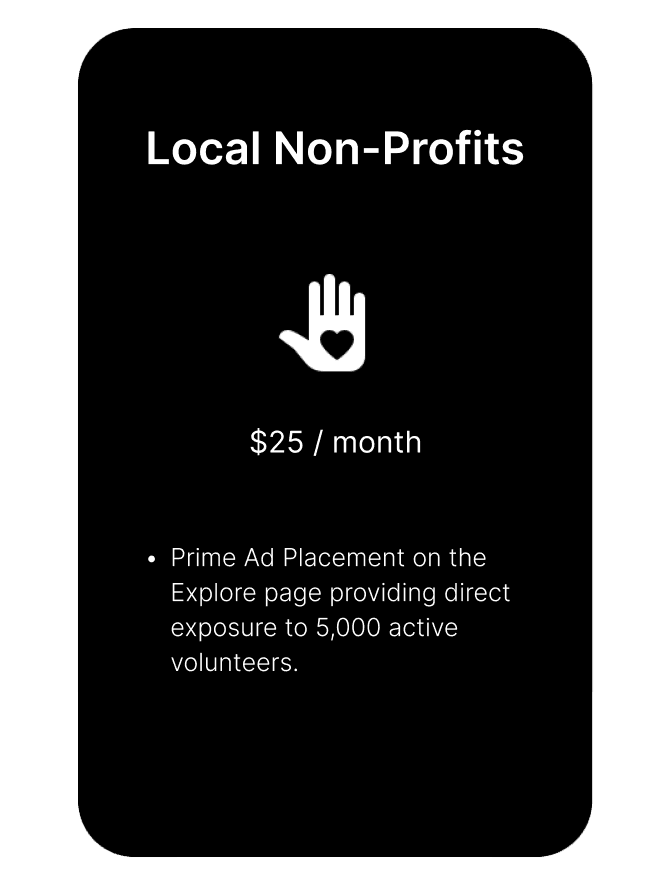
Glow Subscription Package:
Volunteering in this present day and age has been hidden and pushed away as something that is hard to find, get connected to and even harder to commit to. With schools lack of promotion on volunteer opportunities, big corporation companies requiring employees to take personal time off to participate in local community events and overall lack of reward for volunteers. We felt we wanted to redefine what volunteering has been looked at for so many years into something new that excites people and gives people purpose by connecting them to the community and what they feel connected too
Glow Subscription Package:
Volunteering in this present day and age has been hidden and pushed away as something that is hard to find, get connected to and even harder to commit to. With schools lack of promotion on volunteer opportunities, big corporation companies requiring employees to take personal time off to participate in local community events and overall lack of reward for volunteers. We felt we wanted to redefine what volunteering has been looked at for so many years into something new that excites people and gives people purpose by connecting them to the community and what they feel connected too